
Sewer Line Repair & Replacement
When the main line goes, it doesn't fail politely at one fixture. It backs up everywhere at once, usually at the worst possible time.
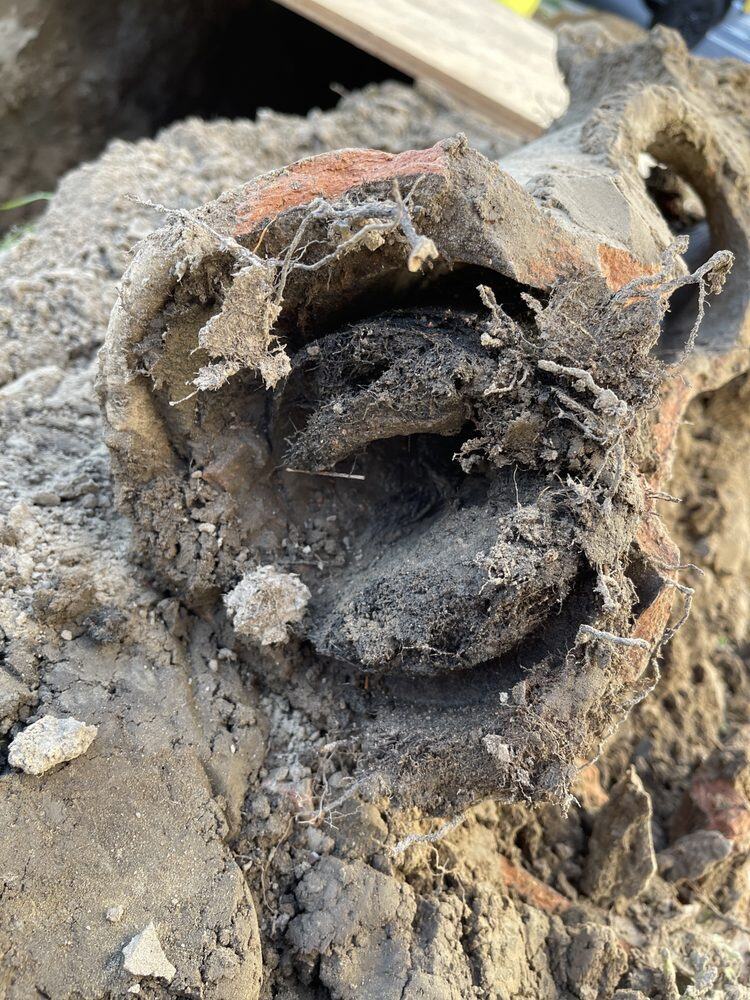
Older San Antonio neighborhoods are full of clay and cast iron sewer laterals that have been in the ground for decades. Clay joints invite tree roots; cast iron corrodes from the inside until the bottom of the pipe is gone. Both fail slowly, then suddenly.
We inspect before we quote, every time. The camera tells us whether we're looking at roots we can cut, a bellied section holding water, a cracked joint we can spot-repair, or a run that's collapsed badly enough that replacement is the only honest answer. Trenchless methods can spare your yard when the existing pipe is in good enough shape to line or burst through — but they don't fit every line, and we'd rather say so upfront than sell you a method that won't hold.
When this is probably your problem
What's included — and what isn't
Included in the quoted price
- Camera inspection of the main line to confirm the cause and location
- Locating and marking the depth and path of the failure
- The agreed repair — spot repair, trenchless lining or bursting, or open-cut replacement
- Backfill and rough grading of any trench we open
- Post-repair camera verification that the new line runs clean
Quoted separately
- Landscaping restoration — sod, plants, irrigation lines, decorative rock
- Hardscape replacement such as driveway, patio, pavers, or sidewalk sections
- Permits, city inspection, and right-of-way fees where the line crosses public property
- Work on the city-side portion of the lateral, which is generally the utility's responsibility
- Septic tank or drain field work, which we don't handle
How this job gets priced
Sewer work is quoted after the camera inspection, based on the length of the affected run, its depth, and what's above it. Trenchless and open-cut get priced separately when both are viable so you can weigh cost against yard disruption yourself. If the camera shows the failure is on the city's side of the connection, we'll tell you that instead of billing you for their pipe.
Also worth reading
What the visit looks like
Camera the line
We see the actual failure — roots, crack, belly, or collapse — and mark its depth and location from the surface.
Price the real options
Whichever methods genuinely fit your line get quoted. We don't pad the list with approaches that won't work.
Repair or replace
Trenchless where it fits and open-cut where it doesn't, with the trench backfilled and rough-graded after.
Verify with the camera
A second camera run confirms flow and grade before we call it finished.
Questions about sewer line repair & replacement
Can you fix a sewer line without digging up my yard?
Sometimes. Trenchless lining or pipe bursting works through small access points and spares most of the yard — but only if the existing pipe's condition, alignment, and depth allow it. Severely offset joints, tight bends, or a fully collapsed section can rule it out. The camera inspection is what tells us, and we'll show you the footage rather than just asserting it.
Are tree roots in the line my tree's fault, or the pipe's?
Both, really. Roots don't break into healthy sealed pipe — they find existing cracks and joints and then widen them. Cutting the roots buys time, but if the joint is already compromised, they come back. That's why we push for a camera look when a line has backed up more than once.
Who's responsible for the part of the line under the street?
Generally, the homeowner owns the lateral up to the connection point and the utility handles the main, but the exact boundary depends on local rules and where the connection sits. If our inspection shows the failure is on the city side, we'll say so and point you to the right department rather than doing work you shouldn't be paying for.
Do I need to replace the whole line or just the bad section?
If the rest of the pipe is sound, a spot repair on the failed section is legitimate and cheaper. If the camera shows the same deterioration along the whole run — common with old cast iron that's corroded through — patching one spot just moves the next failure a few feet down. We'll show you what the camera sees and let you decide with real information.
Ready to get this looked at?
Call and describe what's happening. We'll tell you what it likely is and what confirming it costs.